Clock and swans
Reflections on physical and mental deterioration.

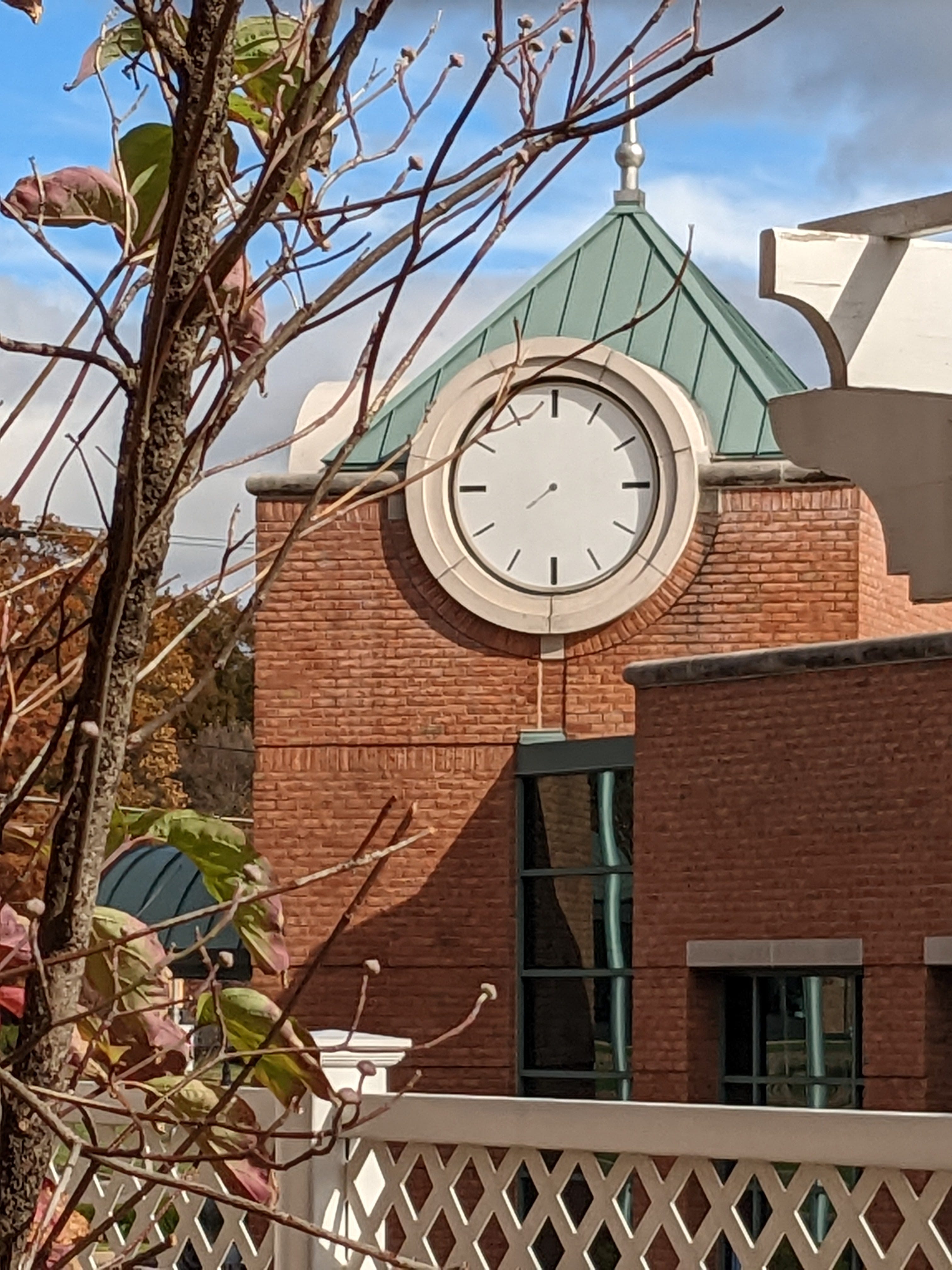
This is the view from the window of my mother’s former assisted living facility, which faced an old bank that closed long ago. The clock is mounted high and faces the street, probably meant to be seen from afar. It was meant to tell time, but with its hands gone, it sits idle and useless, a clock on a building that has outlived its purpose.
We would sit silently for long stretches, staring out the window. The room was dark and quiet, the way she liked it. Facilities of this sort always have a faint antiseptic smell, which I imagine is meant to mask other, less savory odors.
We would talk, staring out the window, she in her wheelchair, calm and expressionless, me at her side. I’d turn on music for her, and we’d listen to old Rabindranath Tagore songs she had heard since childhood.
I remember thinking as I stared out the window: She lives outside of time now.
Not in the sense people sometimes use when talking about old age; not like someone who has learned to let go of the past and stop worrying about the future. She had no understanding of the future, no control over it, and no real ability to imagine it. Her memories of the past were scattered, fragmented, and increasingly fabricated. Sometimes she would speak of my adult children as if they were still young. At other times, she would speak of my father as if he were in the next room.
Eventually, we moved her to a memory care home that could provide higher-level care and more social interaction. It was safer, better staffed, and more appropriate.
But I still think about that clock more often than I care to admit. I think about it every time I ask a patient to draw a clock, which is part of our neurological assessment for dementia.
I think about it every time I forget a name I should know, every time I walk into a room and can’t remember why I went there, every time I choke on a sip of water for no reason at all, and every time my shoulder aches from an old rotator cuff injury.
It reminds me that my body is keeping score, whether I want it to or not. At fifty-five, even if I live to eighty-six, as my father did, I still have fewer good years ahead of me than behind me. Eventually, my body and mind will fail me. That’s a strange realization. Not dramatic. Not catastrophic. Not even surprising. Just strange.
Recently, my mother asked about my father again.
She spoke of him in the present tense, casually, as if he were still alive and might walk through the door at any moment.
I reminded her that he died of pancreatic cancer six years ago.
She looked at me with mild surprise, not grief or devastation. Just surprise. As if I’d told her a piece of news about a distant relative, something she hadn’t gotten around to hearing yet.
“Oh,” she said.
Then, a few minutes later, she had forgotten, and we moved on to other things.
That is one of the cruelest parts of dementia: it doesn’t just steal memory. It steals the emotional continuity of your past life, the way events build on one another, the way experiences accumulate, the way love deepens with shared history and memories. Dementia takes away the stable foundation on which a life is built.
My mother now spends most of her days sitting in her wheelchair in front of the television. When I visit, she tells me fantastical, elaborate stories, pieced together from whatever fragments of memory and imagination her brain can still assemble.
I nod politely. I answer her in the few Bengali phrases I can manage.
Her English has deteriorated as her dementia has progressed. The language that once connected her to her adult life is slowly being replaced by the language of her childhood. This is common yet still unsettling to witness. As dementia progresses, the mind retreats, like a tide pulling back from the shore.
Fortunately, she is in a pleasant, passive state.
People often say dementia amplifies personality. My mother was always a worrier, anxious, constantly scanning the world for what could go wrong. I expected her dementia to sharpen that anxiety into something unbearable.
But it hasn’t.
Instead, she sits quietly, calm, almost serene. She has no interest in getting up to explore her world. She doesn’t wander, argue, or fight. She isn’t a fall risk, thank goodness.
In my years as a neurologist, I have seen what dementia can look like when it is not so gentle.
There is a cluster of symptoms we often refer to as behavioral and psychological symptoms of dementia—agitation, aggression, hallucinations, paranoia, impulsivity, sleeplessness, and sundowning, a phenomenon in which confusion and behavioral symptoms worsen in the late afternoon and evening.
For families, this form of dementia can be devastating. It is one thing to lose someone slowly. It is another to lose them while they become afraid of you, suspicious of you, or physically combative.
In caring for these patients, I look for signs of pain from urinary tract infections, urinary retention, constipation, bedsores, or even fractures. People with dementia often cannot describe discomfort clearly. Pain may present as agitation, yelling, pacing, or striking out.
I encourage the family to try to keep them away from unfamiliar surroundings. Hospitals are particularly brutal environments for dementia patients: bright lights, constant interruptions, strange noises, and unfamiliar faces. It is a perfect recipe for delirium layered atop dementia.
Families are instructed to create routines, reduce stimulation, ensure safety, speak calmly, use distraction, avoid confrontation, and keep things simple.
And still, sometimes none of it works, and antipsychotic medications are prescribed.
These drugs were originally developed to treat schizophrenia. Over time, they were also used to manage severe agitation and psychosis in dementia. However, their use has fallen out of favor since the FDA issued black box warnings after studies showed that they increase mortality risk in dementia patients by roughly 1.6 to 1.7 times compared with a placebo.
And yet they are still used.
Because sometimes the choice isn’t between a risky medication and no medication at all. Sometimes it’s between a risky medication and a patient who is terrified, sleepless, aggressive, or in danger of harming themselves or others.
In the United States, about one in five nursing home residents receives an antipsychotic medication. Given the risks, that number seems high, but it is unsurprising. Dementia is not just a disease of memory. It is a disease of human management. It is the slow collapse of the brain’s self-regulation. And there is only so much a caregiver can do.
Like most people in my position, I feel guilty.
I should be doing more.
I should be by her side more often, interacting with her, encouraging her, and keeping her socially engaged. And as a neurologist, I feel a particular kind of guilt, the kind that whispers: If anyone should be able to help her, it should be you.
But I don’t have much to offer.
I nod and smile while she tells me about family members in India as if they had visited yesterday. I listen as she describes people who may not exist. I respond in broken Bengali. I ask questions. I try to keep her comfortable.
And then I leave.
The truth is that she is, in many ways, “stable.” She is on appropriate medications. She is not distressed, aggressive, or suffering the terror some dementia patients endure.
So I remain a passive observer, trying to fill her days whenever I can, trying not to think too hard about the inevitable.
I have been in neurology long enough to witness the evolution of our understanding of Alzheimer’s disease.
In the 1990s, the so-called “Decade of the Brain,” there was a sense that breakthroughs were imminent. We were learning more about the neurobiology of dementia at an accelerating pace. New imaging, new biomarkers, new theories. New hope.
I’ve also seen trends come and go.
When I was in medical school, there was widespread concern that environmental aluminum was increasing the incidence of Alzheimer’s disease. That theory eventually faded. More recently, interest has focused on whether certain viruses, like HSV, might accelerate dementia. I just finished reading an article in the Journal of the American Medical Association (JAMA) about a study that used antiviral agents to slow cognitive decline. It was a negative trial. No benefit.
In medicine, the landscape is littered with promising hypotheses that didn’t survive contact with reality.
The most widely accepted hypothesis today is that Alzheimer’s disease is driven, at least in part, by the abnormal accumulation of beta-amyloid, a protein that clumps into plaques. These plaques disrupt neural function, triggering a cascade of damage. Another protein, tau, forms tangles inside neurons, destabilizing their internal structure and contributing to cell death. Neuroinflammation and vascular disease also appear to contribute.
The hippocampus—essential for forming new memories—is among the earliest and most severely affected regions.
Eventually, other parts of the brain are affected. Neurons die, connections are lost, and neurotransmitter systems deteriorate, particularly the acetylcholine pathways. The brain becomes less able to communicate with itself, integrate experience, and maintain identity.
The medications we currently use, cholinesterase inhibitors and memantine, provide modest symptomatic benefit. Newer monoclonal antibodies aim to remove amyloid plaques and represent a genuine scientific milestone, though their real-world impact remains limited and their risks significant.
We have made progress, but we do not yet have a cure.
So, what can be done to slow the process of physical and mental decline?
The uncomfortable answer is that no single intervention guarantees protection.
There is no diet, supplement, or pill that can protect you from the effects of aging.
But there are strategies that, at the very least, tip the odds in your favor.
There is no single diet universally recommended to prevent dementia. However, the evidence strongly suggests that a heart-healthy diet is also brain-healthy. The brain is a highly vascularized organ that lives and dies by blood flow.
Diets such as the Mediterranean and DASH diets, which are low in saturated fats, salt, and processed sugars and high in vegetables, fish, whole grains, and healthy oils, appear to reduce cardiovascular risk and, by extension, may reduce dementia risk.
And vascular disease matters. We now understand that stroke and microvascular injury can significantly accelerate cognitive decline in the presence of Alzheimer’s pathology. If you want to protect your brain, protect your blood vessels.
Exercise is equally important.
Muscle mass and flexibility begin declining in the thirties and accelerate after age sixty. Regular resistance training and stretching help preserve function, and moderate aerobic exercise appears to support cognitive health as well.
The mechanisms are complex: enhanced cerebral blood flow, reduced inflammation, improved glucose regulation, lower blood pressure, and better sleep. The body and brain are not separate systems. They are a single machine, and neglect in one domain leaks into the other.
My mother struggled with cervical spine arthritis for years. Eventually, she required surgery, which unfortunately did not render much benefit. She completed physical therapy afterward but had little interest in continuing the exercises after therapy ended. Over time, she became unable to walk.
In rehabilitation medicine, there is a concept called learned disuse.
When an activity becomes difficult or painful, people stop doing it. The muscles weaken, and the tendons tighten, making the activity even harder. Avoidance becomes self-reinforcing, accelerating the decline.
Learned disuse doesn’t apply only to physical activity. It also applies to cognition and social engagement.
Anyone with a smartphone knows this. We used to memorize phone numbers effortlessly. Now we outsource memory to our devices. We don’t recall. We retrieve. We don’t exercise our memory, so it weakens.
Use it or lose it.
That is why I encourage my patients to engage in cognitively demanding activities: reading, puzzles, learning new skills, playing music, writing, and other brain-challenging pursuits.
And there is nothing like social interaction to keep the mind engaged.
My mother was once a part of a vibrant expat Indian community. She was surrounded by friends, conversation, and constant engagement. Before she moved closer to us, when my father became ill, her life was full of people.
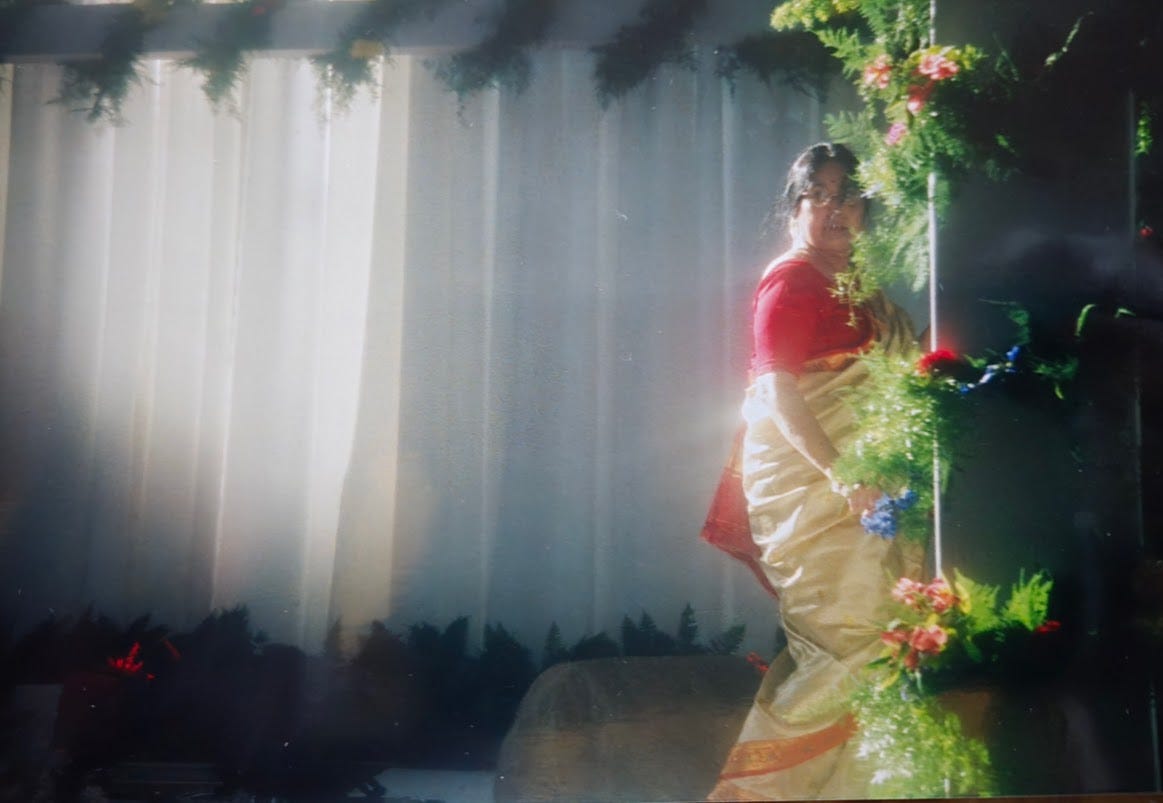
She now avoids social interaction despite encouragement. She sits alone, content in her quiet world.
When she is forced into conversation, I occasionally catch glimpses of her former self. The social woman. The storyteller. The one who enjoyed talking.
I see this most clearly when she describes her hallucinations to me.
She tells me about a giant snake that guards the house she lives in. Sometimes it sleeps in her room. It is friendly.
She tells me that one of the residents turned into a bird and flew out the window.
She tells me about little people who live in the trees around the house.
I ask questions. I make sure she isn’t frightened. I listen. I don’t correct her.
And in some strange way, these stories comfort me. They prove that her brain is still doing what brains do: generating meaning, creating narratives, and filling silence with imagination. When there is nothing else to do, the mind creates stories.
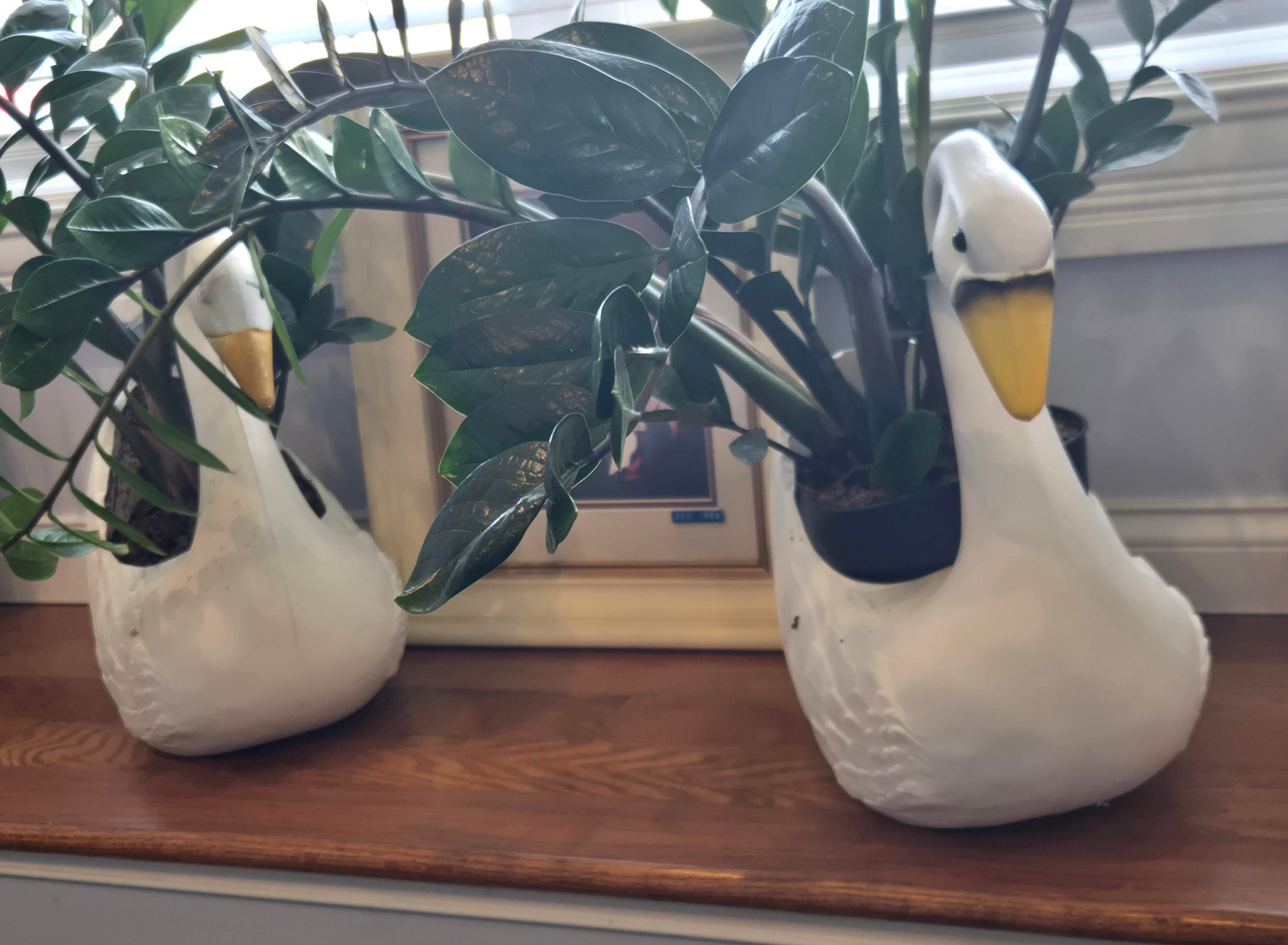
When we moved her into the memory care home, we brought over a plant holder shaped like a swan—something she had in her old home when my father was still alive.
She had owned a pair of swan-shaped planters. One had fallen apart in my yard, destroyed by the effects of weather and neglect. When I brought over just one, she asked what happened to the other.
I was embarrassed that my negligence had led to its demise, and a bit surprised that she remembered that she had two.
She doesn’t get upset often, but this seemed to trouble her. She grew quiet, frowning. She told me that the swan should not be alone.
I searched online, found a replacement, and brought it over. Her face lit up. Balance had been restored in the universe.
We talk about dementia as memory loss. But dementia is also social death, the slow severing of connections. It is the gradual narrowing of a person’s world until it consists of a chair, a television, a handful of confused stories, and an occasional visitor.
I sometimes think about that clock without hands.
For me, time still moves. I can feel its effects within me: in my stiff shoulder and my occasional lapses. All of this is a reminder. Time moves whether you’re paying attention or not.
And the best we can do, the only thing we can do, is fill the hours with whatever love and meaningful activities we can manage before our time finally runs out.
So beautifully written. By a loving son, who is a knowledgeable, accomplished doctor, yet helpless as anyone facing loss due to dementia.
Thanks for sharing your beautiful humanity, Dr. Acharya.
Beautiful job blending your clinical experience with your personal experience. Love the swan anecdote!